Note: Letters below the tuner are interactive buttons. To hear Open G tuning, press the first G, the second G, and the second D.
Directions:
Make sure the tuner is set to “Banjo” and “Standard Tuning.”
Click the red microphone button and allow your computer or phone to use its microphone.
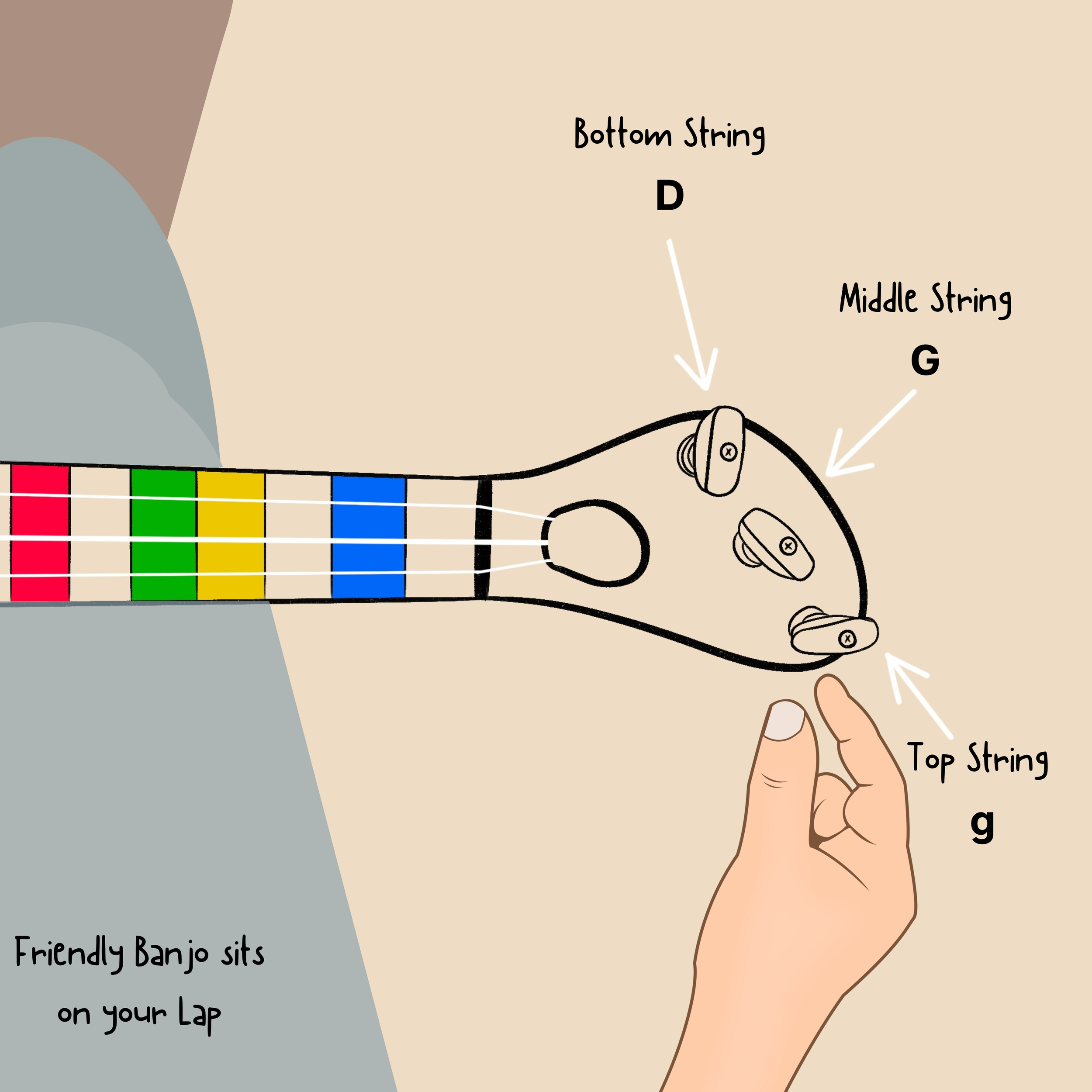
For Open G tune your banjo strings from top to bottom: g, G, D. This matches all the notes in our video lessons so you can play along easily.
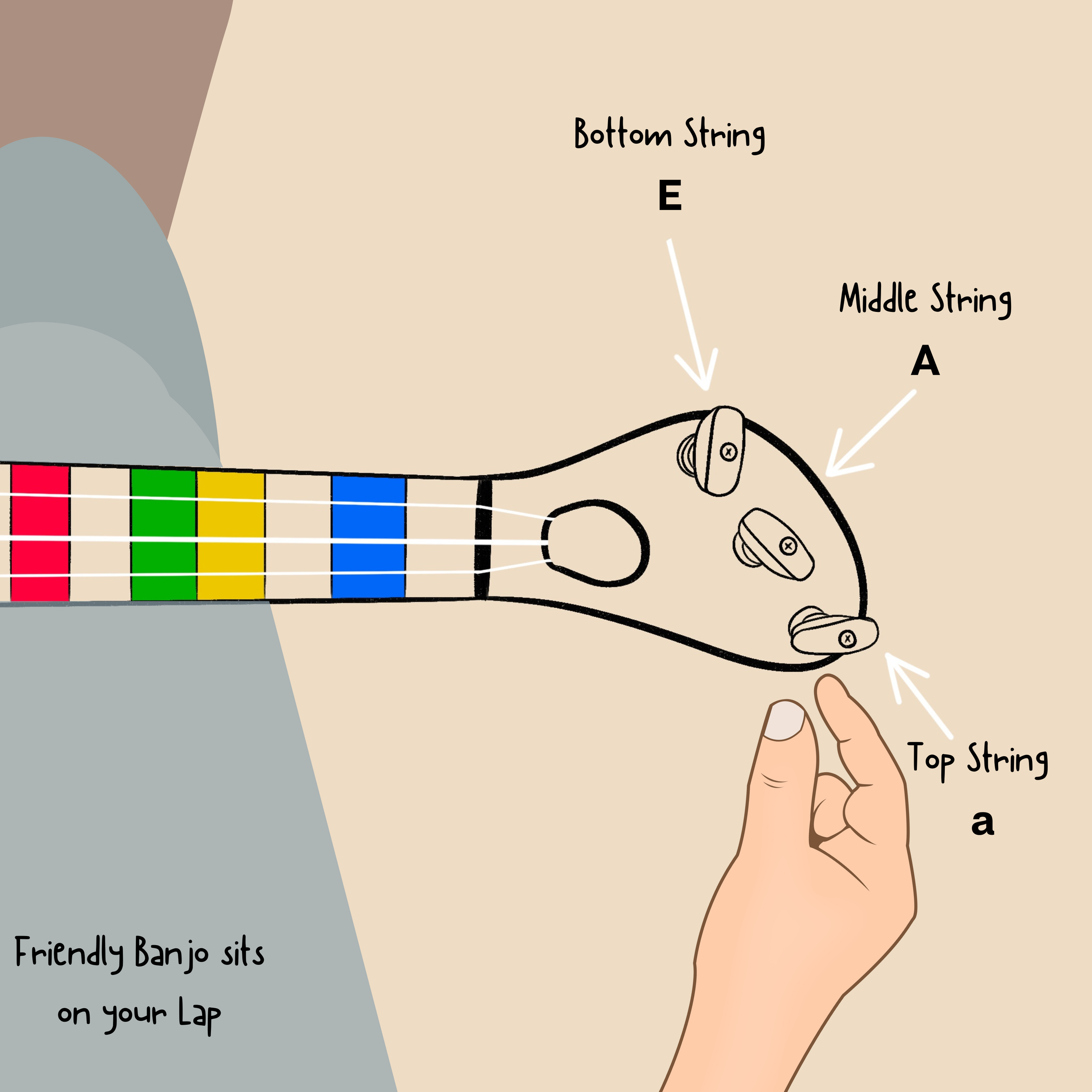
For Open A tune your banjo strings from top to bottom: a, A, E. Each note is two steps higher than when in Open G tuning, giving a brighter sound.
All play-by-color tablatures can be played in either tuning.
See diagram below if clarity needed.
Note: If you’re tuning a brand new Friendly Banjo, the nylon strings need some time to stretch before they hold their tune. You can watch this video to learn a good technique for helping them stretch faster:
Tuner provided by GuitarApp
Tuning Diagrams
Right-Handed Players
(Place the Friendly Banjo on your lap. Use your left hand to tune the strings and your right hand to pluck the strings.)
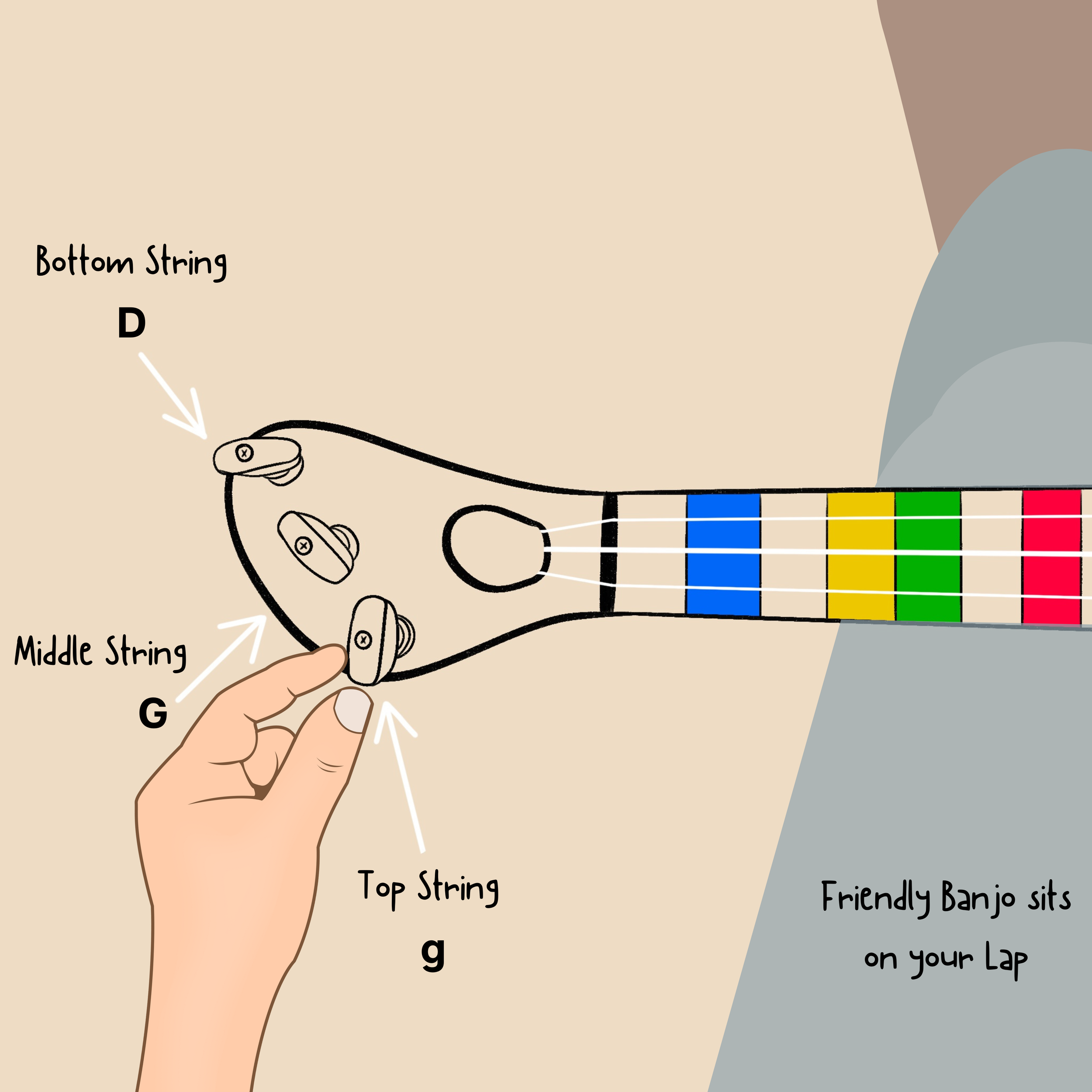
Open G tuning
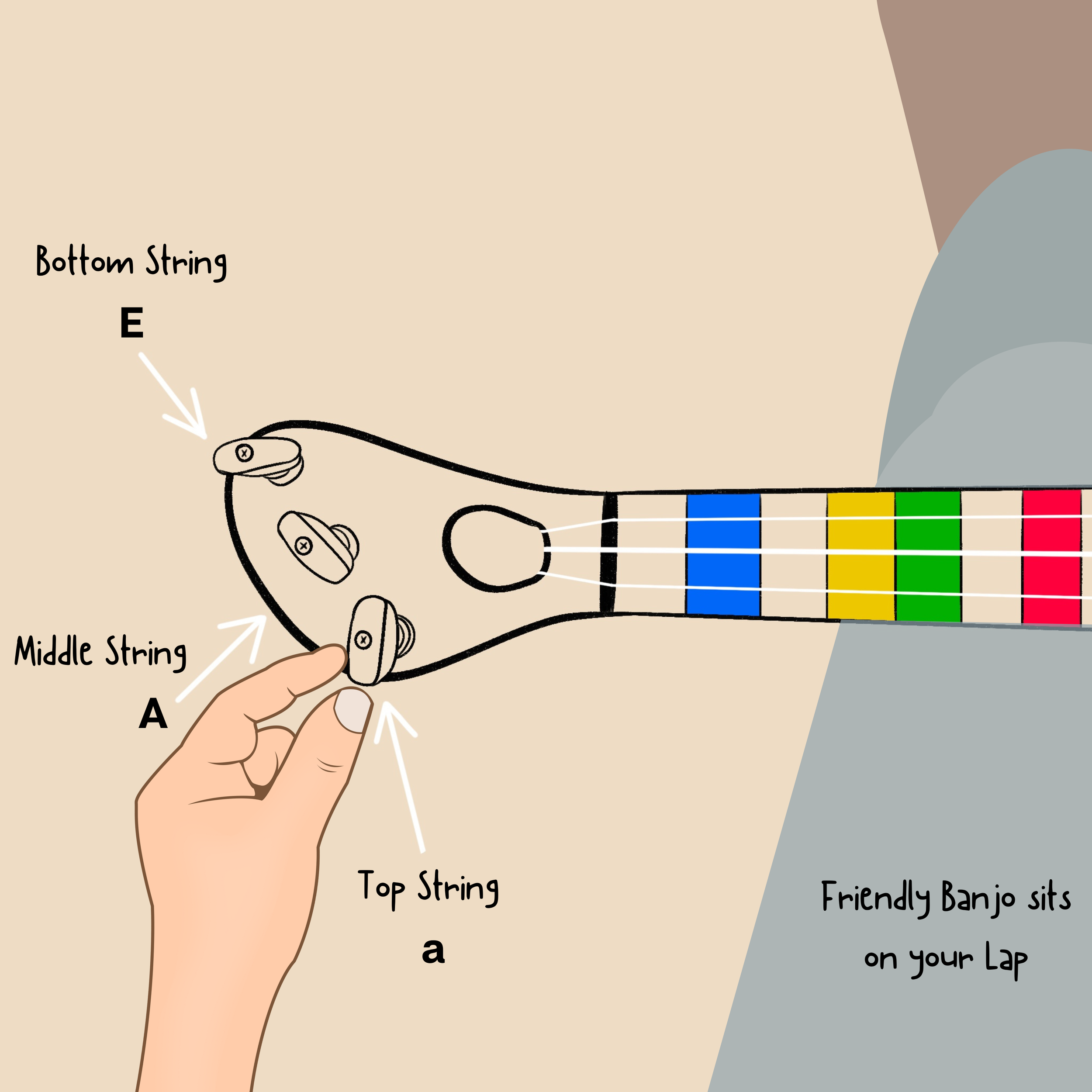
Open A tuning
Left-Handed Players
(Place the Friendly Banjo on your lap. Use your right hand to tune the strings and your left hand to pluck the strings.)
Open G tuning
Open A tuning